
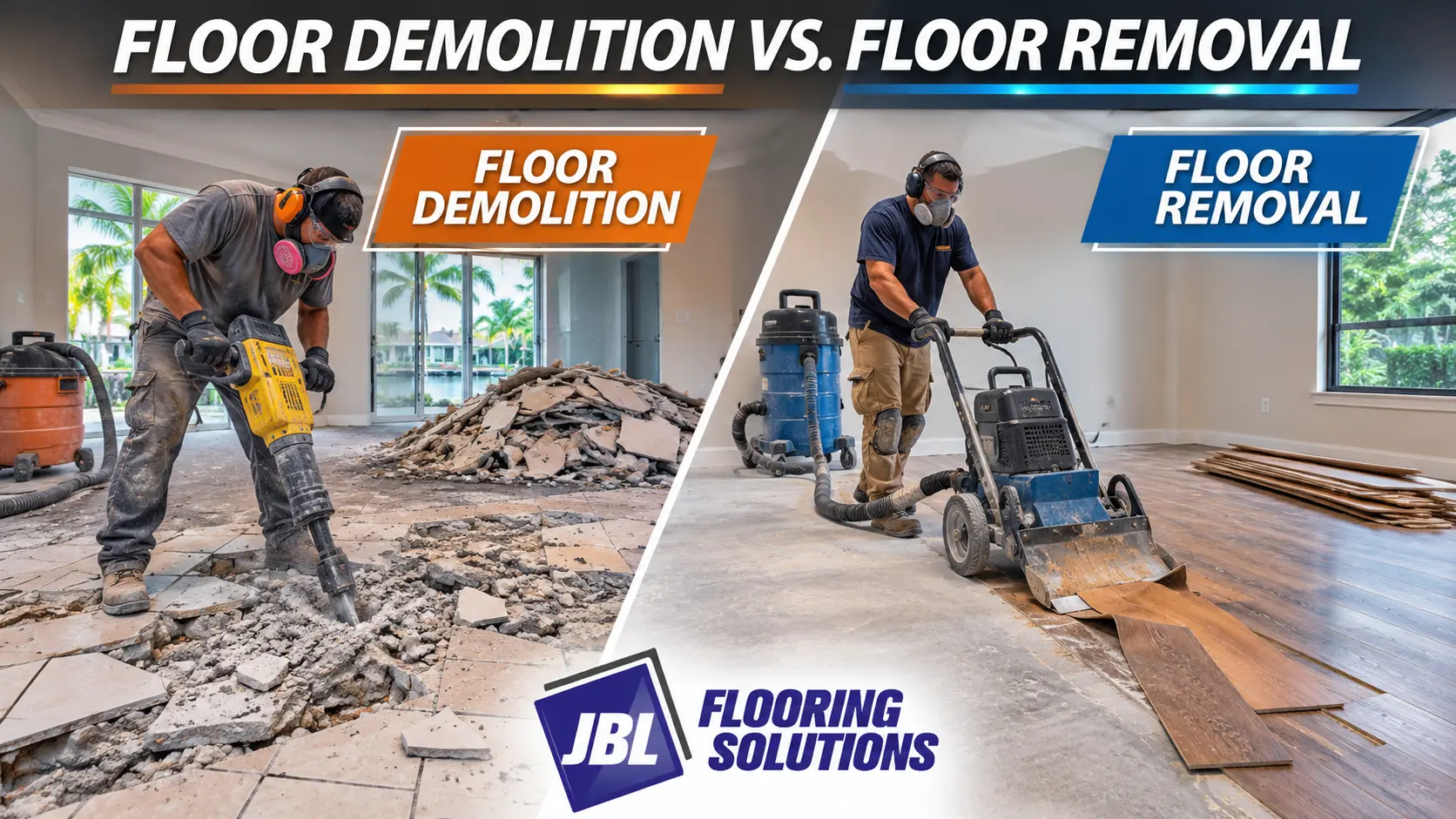
Planning a flooring renovation? You may encounter two common terms: floor demolition and floor removal. Although contractors sometimes use these terms interchangeably, they can describe different approaches to removing existing flooring.
Understanding floor demolition vs floor removal helps homeowners choose the right service, protect their subfloors, and avoid unexpected renovation costs.
At JBL Flooring Solutions, we specialize in professional flooring removal throughout South Florida, helping homeowners and contractors prepare properties for new flooring installations.
What Is Floor Demolition?
Floor demolition generally refers to breaking apart and removing existing flooring materials using specialized equipment.
This approach is commonly associated with removing hard, heavily bonded surfaces or larger sections of a flooring system.
Floor demolition projects may involve:
- Breaking and removing ceramic or porcelain tile.
- Removing natural stone flooring and mortar.
- Demolishing damaged concrete surfaces.
- Removing multiple layers of existing flooring.
- Breaking apart stubborn flooring materials.
Depending on the project, demolition may involve removing more than the finished flooring surface.
For example, some renovations require removing damaged underlayment or sections of a concrete slab.
What Is Floor Removal?
Floor removal focuses on taking out existing flooring materials while preserving the underlying substrate whenever possible.
Professional flooring removal services use specialized equipment and removal techniques suited to different flooring materials.
Common flooring removal projects include:
- Carpet and carpet padding removal.
- Hardwood and engineered wood removal.
- Vinyl and laminate flooring removal.
- Ceramic and porcelain tile removal.
- Flooring adhesive and thinset removal.
The goal is to expose a suitable subfloor for inspection and preparation before installing replacement flooring.
However, floor removal does not automatically guarantee that the underlying concrete or plywood will remain undamaged.
Floor Demolition vs Floor Removal: Key Differences
Although both services involve removing existing flooring, their scope and methods can differ.
1. Removal Methods
Floor demolition may involve heavy-duty breakers, chipping equipment, and other tools designed to break apart stubborn materials.
Floor removal may use scrapers, specialized stripping machines, or controlled mechanical removal methods.
The equipment depends on the flooring material and installation method.
2. Subfloor Protection
Floor removal generally prioritizes preserving the existing substrate.
Demolition may intentionally remove damaged underlayment or concrete when the renovation requires it.
However, both services require careful planning to minimize unnecessary property damage.
3. Project Costs and Timeline
Costs depend on square footage, flooring type, adhesive strength, accessibility, and debris disposal requirements.
Neither service is automatically cheaper or faster.
For example, removing heavily bonded tile may require more labor than removing loose-lay carpeting.
Which Flooring Service Do You Need?
The right approach depends on your renovation goals.
Choose floor removal when replacing existing flooring while retaining the underlying substrate.
More extensive demolition may be necessary when damaged concrete, deteriorated underlayment, or additional structural materials require removal.
A professional assessment helps determine the appropriate scope.
Professional Flooring Removal in South Florida
Understanding floor demolition vs floor removal helps you plan your renovation and avoid unnecessary work.
JBL Flooring Solutions provides professional flooring removal for residential and commercial properties throughout South Florida.
Whether you’re replacing carpet, tile, hardwood, or vinyl, our experienced team can help prepare your space for its next transformation.
Ready to start your flooring renovation? Contact JBL Flooring Solutions today to request a professional flooring removal estimate.