
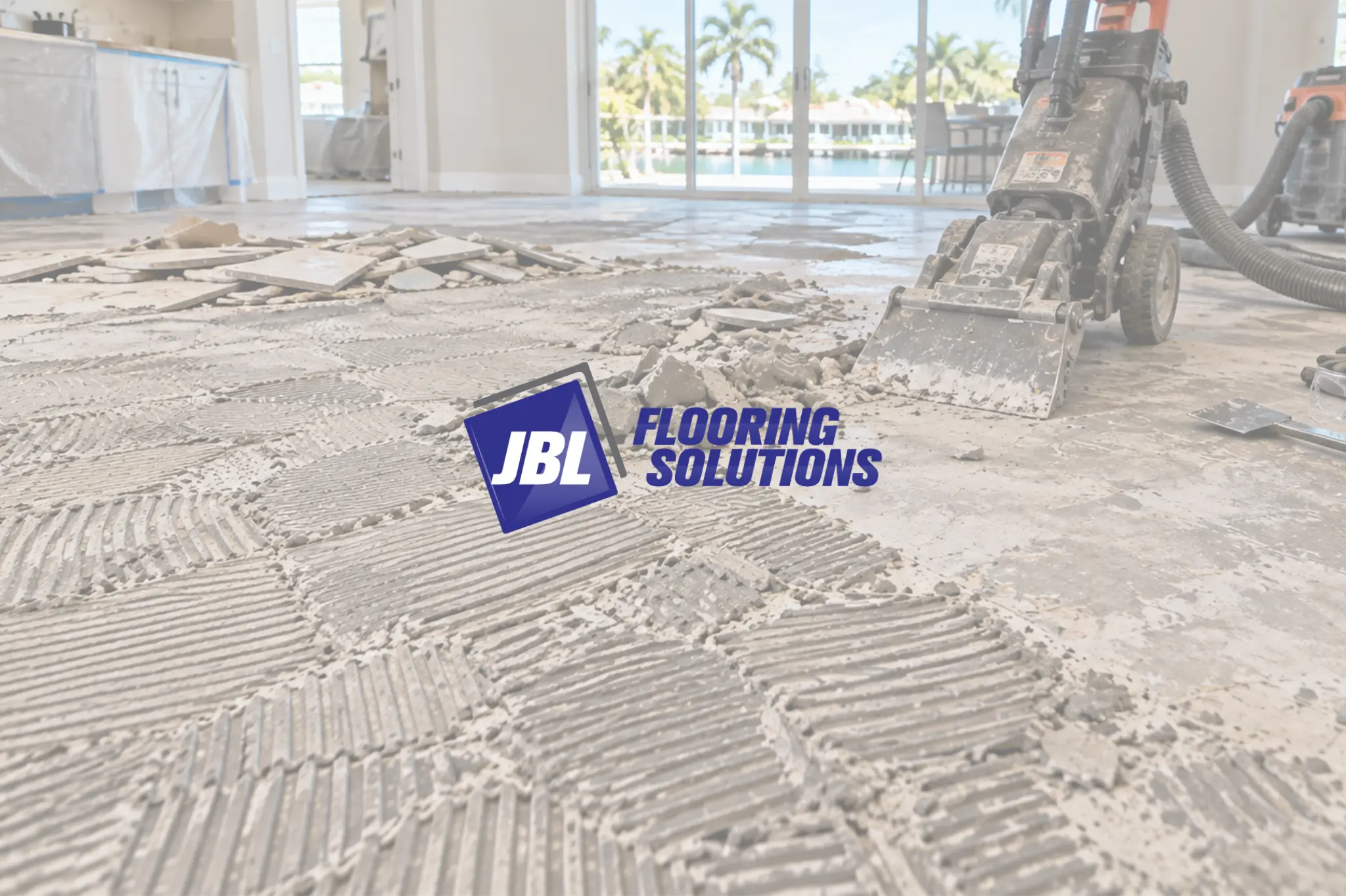
The most common thinset removal mistakes that damage concrete are using too much force, holding demolition tools at the wrong angle, grinding too deeply, using inappropriate equipment, and continuing to work without checking the slab. Thinset is designed to bond strongly to concrete, so removing it requires a balance between breaking that bond and protecting the surface underneath.
For homeowners, this is where a seemingly straightforward DIY flooring project can become expensive. At JBL Flooring Solutions, we regularly remove stubborn thinset and prepare concrete subfloors for the next flooring installation.
1. Using Too Much Force With a Hammer or Chisel
One of the most common thinset removal mistakes is assuming more force will make the job easier.
Repeatedly striking hardened mortar with a hammer and chisel can chip or gouge the concrete underneath. The goal is to separate the thinset from the slab, not break into the slab itself.
Professional removal equipment provides greater control and allows contractors to work across larger areas without relying solely on heavy impact.
2. Holding the Removal Tool at the Wrong Angle
Tool angle matters.
A scraper or chisel positioned too vertically can direct force downward into the concrete instead of underneath the thinset. This increases the likelihood of creating divots and surface damage.
A lower working angle helps attack the bond between the mortar and concrete rather than the slab itself.
3. Grinding Too Aggressively
Grinding can be extremely effective for stubborn thinset, but aggressive grinding is another way concrete gets damaged.
Removing too much material can create:
- Low spots
- Uneven surfaces
- Visible grinding marks
- Additional floor preparation work
The objective is to remove the remaining mortar while preserving a consistent concrete surface for the next flooring system.
4. Using the Wrong Equipment
A small hand scraper might work for isolated patches, but removing thinset across a kitchen, living area, or entire home is a different project.
Using equipment that is too small can encourage homeowners to apply excessive force. Using overly aggressive demolition equipment can create the opposite problem and damage the slab.
Professional thinset removal uses equipment selected for the condition of the mortar, concrete, and overall project.
5. Assuming Every Area of Thinset Is the Same
Thinset does not always bond evenly.
One section may release relatively easily while another is extremely well bonded. Continuing with exactly the same pressure and technique across the entire floor can damage areas where less force is necessary.
Experienced flooring removal contractors adjust their approach as conditions change.
6. Forgetting About Dust Control
Removing and grinding thinset can generate substantial amounts of fine dust. Allowing that material to spread throughout an occupied property makes cleanup significantly more difficult.
Dust can reach nearby rooms, furniture, and HVAC systems. Proper containment and professional dust collection equipment make the process much more manageable.
7. Focusing Only on Removal, Not the Finished Subfloor
The job is not finished simply because the visible thinset is gone.
The concrete needs to be suitable for whatever flooring comes next. Gouges, high spots, adhesive residue, and uneven patches can interfere with a new installation.
That is why professional thinset removal focuses on both removing the old mortar and preserving the concrete underneath.
Avoid Costly Concrete Damage With JBL Flooring Solutions
Thinset is intentionally designed to create a strong bond, which is exactly why removing it can be challenging. Trying to rush the process or relying on excessive force can turn a flooring removal project into a concrete repair project.
JBL Flooring Solutions provides professional thinset and flooring removal throughout South Florida. Our team uses specialized equipment to remove stubborn mortar efficiently while preparing the concrete subfloor for its next flooring installation.
If your tile is already gone but you’re left staring at hardened mortar across the slab, JBL Flooring Solutions can handle the difficult part and help keep your renovation moving forward.
