Thinset is difficult to remove because it is specifically designed to create a strong, permanent bond between tile and the surface underneath. Once cured, thinset becomes extremely hard and can adhere tightly to concrete or other subfloor materials. Removing it often requires heavy scraping, chipping, grinding, or professional floor removal equipment to create a smooth surface for new flooring.
If you’ve recently removed tile and discovered a rough layer of hardened mortar underneath, you’re looking at thinset. For many homeowners, getting the tile up turns out to be only half the job.
What Is Thinset?
Thinset is a cement-based mortar commonly used to install ceramic, porcelain, and natural stone tile. It is applied between the tile and substrate to create a durable bond capable of handling years of foot traffic.
That durability is excellent when you want tile to stay in place. It becomes considerably less convenient when it’s time for a renovation.
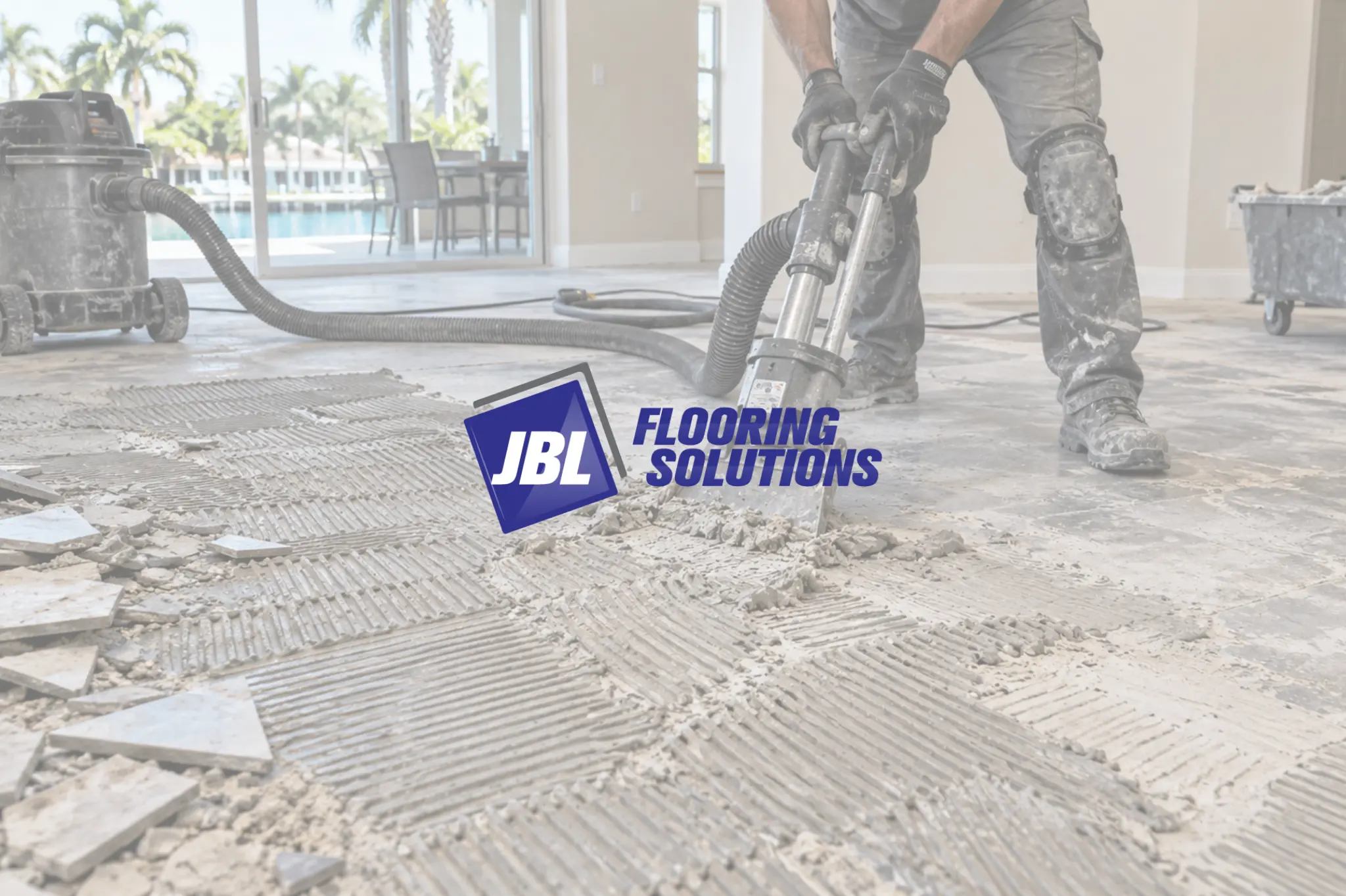
Once thinset cures, it isn’t designed to peel away easily. It can form a dense layer across the floor with ridges and hardened areas firmly bonded to the surface underneath.
Why Is Thinset So Hard to Remove From Concrete?
Concrete and thinset work particularly well together because both are cementitious materials. When properly installed, thinset develops a strong mechanical bond with the concrete surface.
Instead of simply sitting on top of the slab, the mortar grips the surface. As a result, removing tile may leave behind large amounts of hardened thinset.
The difficulty can vary depending on:
- How long the thinset has been installed
- The type of mortar used
- How well the original surface was prepared
- Thickness of the thinset
- Size of the tiled area
- Condition of the concrete underneath
A small bathroom may be manageable with hand tools. Removing thinset across several hundred or thousand square feet is a very different project.
Why Does Thinset Need to Be Removed?
It can be tempting to leave some of the old mortar behind, especially after spending hours removing tile. However, the condition of the subfloor matters when preparing for new flooring.
Large thinset ridges and uneven patches can interfere with the new installation and create an inconsistent surface.
The goal is not simply to remove the old tile. The floor needs to be properly prepared for whatever comes next.
JBL Flooring Solutions provides professional thinset removal throughout South Florida, including projects where tile has already been removed but stubborn mortar remains on the concrete.
Can You Remove Thinset Yourself?
Yes, but the difficulty depends heavily on the size and condition of the project.
DIY methods may involve:
- Floor scrapers
- Chisels
- Hammers
- Rotary hammers
- Grinding equipment
For a small area, this may be practical. For an entire home, however, homeowners can quickly discover just how physically demanding thinset removal can be.
Grinding also creates another challenge: dust. Using the correct equipment and dust-control methods becomes increasingly important as the project gets larger.
How Professionals Remove Thinset
Professional contractors can approach the floor differently because they have equipment designed for larger demolition projects.
Depending on the condition of the thinset, removal may involve mechanical scraping, chipping, or grinding to remove the hardened material and prepare the concrete beneath it.
JBL Flooring Solutions specializes in both tile removal and the thinset removal that remains afterward. Handling both stages together can save homeowners considerable time compared with removing the tile themselves and then discovering that the mortar is the harder part of the job.
When Should You Hire a Thinset Removal Contractor?
Professional removal is especially worth considering when:
- Thinset covers a large area
- The mortar is extremely hard
- You’re working on a tight renovation schedule
- New flooring installation is approaching
- DIY removal is progressing too slowly
- You want the subfloor professionally prepared
For homeowners and contractors throughout South Florida, JBL Flooring Solutions can handle the difficult demolition work and help get the floor ready for the next stage of the renovation.
The Bottom Line
Why is thinset so difficult to remove? Because it was engineered to bond tile securely to the surface beneath it and remain there for years. Once cured, that strength makes thinset considerably more difficult to remove than many homeowners expect.
If you’re facing a floor covered in hardened mortar, JBL Flooring Solutions offers professional thinset and flooring removal services throughout South Florida. Instead of spending days scraping and grinding the floor yourself, an experienced removal crew can handle the difficult work and help keep your renovation moving forward.