
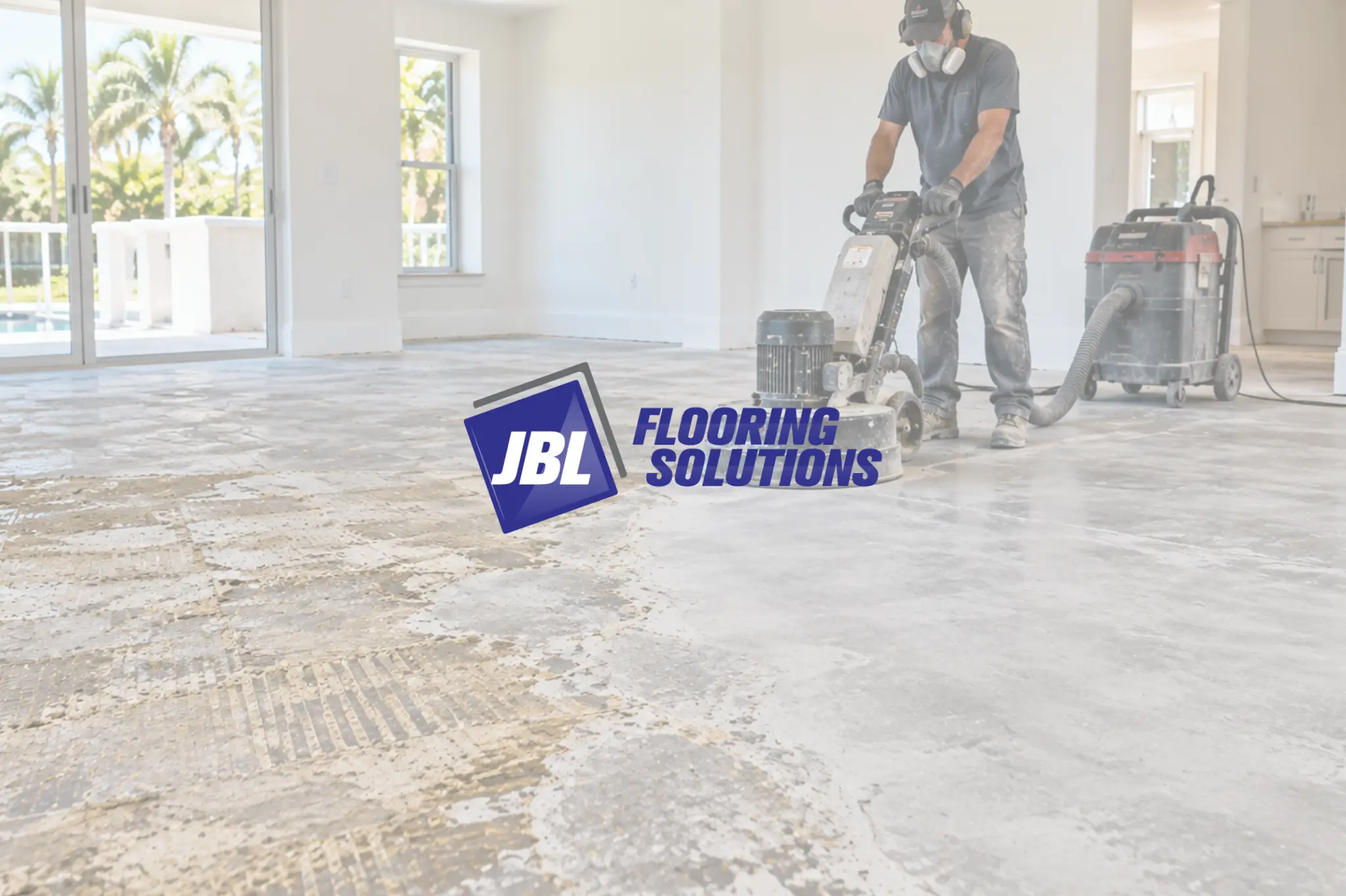
Removing old carpeting is an important first step in any flooring renovation. However, the exposed concrete underneath isn’t always ready for new flooring. Adhesive residue, uneven surfaces, and hidden moisture issues can create installation problems if left untreated.
Preparing concrete floors after carpet removal involves cleaning the surface, removing leftover materials, inspecting the concrete, and correcting imperfections before installation.
Understanding these steps helps homeowners achieve a smoother renovation and longer-lasting flooring results.
Why Is Concrete Floor Preparation Important?
Concrete subfloors provide a foundation for many flooring materials, including luxury vinyl plank, tile, and engineered hardwood.
Even minor imperfections can affect how new flooring performs.
Proper concrete floor preparation helps:
- Remove leftover carpet glue and debris.
- Identify cracks and uneven surfaces.
- Address moisture-related concerns.
- Improve compatibility with new flooring materials.
- Reduce the risk of installation failures.
Skipping preparation can lead to uneven flooring, adhesion problems, and expensive repairs.
How to Prepare Concrete Floors After Carpet Removal
1. Remove Remaining Carpet Materials
After removing the carpet, inspect the concrete for leftover padding, tack strips, nails, and fasteners.
These materials must be removed before additional preparation begins.
Professional carpet removal services help eliminate old flooring materials and expose the underlying surface for inspection.
2. Remove Carpet Glue From Concrete
One of the biggest challenges is removing adhesive left behind by glued-down carpeting.
Old carpet glue can create an uneven surface and interfere with new flooring installation.
Depending on the adhesive, professionals may use mechanical scraping, grinding, or compatible removal products.
Older flooring adhesives should be evaluated before disturbance because some historical materials may contain asbestos.
3. Clean and Inspect the Concrete
Once adhesives are removed, the concrete should be thoroughly cleaned.
Dust, dirt, and loose debris can interfere with flooring adhesives and other installation materials.
Inspect the surface for:
- Cracks or deteriorating concrete
- Uneven areas or raised sections
- Moisture stains
- Remaining adhesive residue
Identifying these issues early helps prevent installation delays.
4. Check for Moisture Problems
Moisture testing is particularly important for South Florida properties, where humidity and slab moisture can affect flooring installations.
Concrete may appear dry while still containing moisture levels unsuitable for certain flooring products.
Professionals can perform appropriate moisture testing based on the flooring manufacturer’s requirements.
5. Repair and Level the Concrete Surface
Before installation, cracks, low spots, and surface irregularities may require repairs.
Grinding can address certain raised areas, while compatible patching or leveling compounds can correct depressions.
The finished surface must meet the flatness and preparation specifications of the selected flooring system.
Can You Install New Flooring Directly Over Concrete?
Yes, many flooring materials can be installed over concrete when the surface meets the manufacturer’s requirements.
Luxury vinyl plank, tile, and certain engineered hardwood products commonly use concrete substrates.
However, proper moisture control, surface preparation, and installation methods remain essential.
Professional Concrete Floor Preparation in South Florida
Preparing concrete floors after carpet removal requires careful attention to adhesive residue, moisture conditions, and surface imperfections.
JBL Flooring Solutions helps South Florida homeowners and businesses remove outdated flooring and prepare for their next renovation.
Ready to replace your old carpet? Contact JBL Flooring Solutions to discuss your flooring removal project and request a professional estimate.


